


Why International Kindergarten Is More Than Just Learning English
Submitted by belgravia_admin on Mon, 05/18/2026 - 12:17
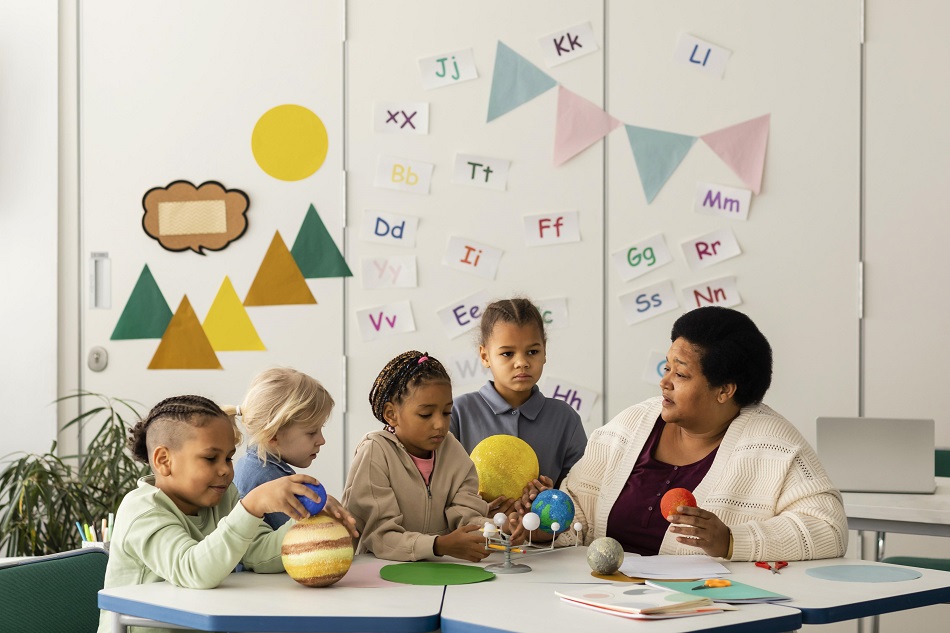
Cross-sectional studies suggest that for families considering an early childhood education pathway, language acquisition may be their primary measure of success. Though a steady immersion will naturally yield fluency in their global language of English, the true wealth offered by your local international kindergarten goes far beyond vocabulary and syntax. These targeted institutions centre on a developmental model that informs the cognitive, social and emotional blueprint of young learners during their most important formative years.
Constructing Emotional Intelligence and Resilience
Transitioning from a home life to the formal structure of school is a huge adjustment for a young child, they are challenged to regulate their emotions in ways that were not necessary previously. In the case of an international kindergarten, teachers used specific, play-based approaches to enable students to detect, articulate and control their emotions. There are countless ways daily life provides chances to practice patience, sharing and resolution of low-level conflict on their own. This intentional teaching of emotional literacy fosters a fortifying resilience that primes children to face future academic hurdles with confidence and in the right head space.
Navigating Diversity through Social Intelligence
International kindergarten exposes children to a culturally-rich peer group and teachers at the most flexible stage of their worldview. There is something in the nature of befriending classmates with different cultural backgrounds every day that helps develop social intelligence and empathy. Children learn to recognize that different points of view exist and gain the capacity to harmonize and communicate across cultural barriers. Such early exposure builds a foundation for global citizenship, which goes beyond mere tolerance and towards real cross-cultural appreciation.
Executive Function and Cognitive Flexibility Training
Early years curricula in high-quality international contexts intentionally stimulate executive function peak attention. Tasks such as constructing elaborate block designs, following directions for multi-step projects, or transitioning between various centers of study call on high levels of working memory and mental flexibility. These cognitive exercises are essential to an international kindergarten and the reason is that they train the brain to focus, plan and solve problems these are skills that strongly correlate with long-term academic success.
Polishing Physical Coordination And Motor Skills
In order to develop holistically, the child needs a balance of cognitive and physical tasks; that is where you come in. The day is full of structured physical play, sensory activities, and fine motor skills like painting and modelling clay or using child-safe scissors in international kindergarten. These are important for learning bilateral coordination, space awareness, and grip strength needed for writing later. At this phase, physical competence solidifies a sense of agency for children.
Cultivating an Inquiry-Based Mindset
The ultimate goal of early years education should be to nurture and channel a child's natural curiosity. Instead of dictating information that is dry and regurgitated in nature, teachers promote inquiry-based learning where children ask how the world works. It turns the classroom into a laboratory of discovery where errors become simply another set of data in the learning cycle. Institutions like Brighton College Bangkok embrace this outlook alongside a robust pastoral emphasis on kindness, ensuring that as children become intellectually able they also grow into thoughtful citizens.