


How Nursery School Supports Multilingual Development
Submitted by belgravia_admin on Wed, 06/24/2026 - 17:18
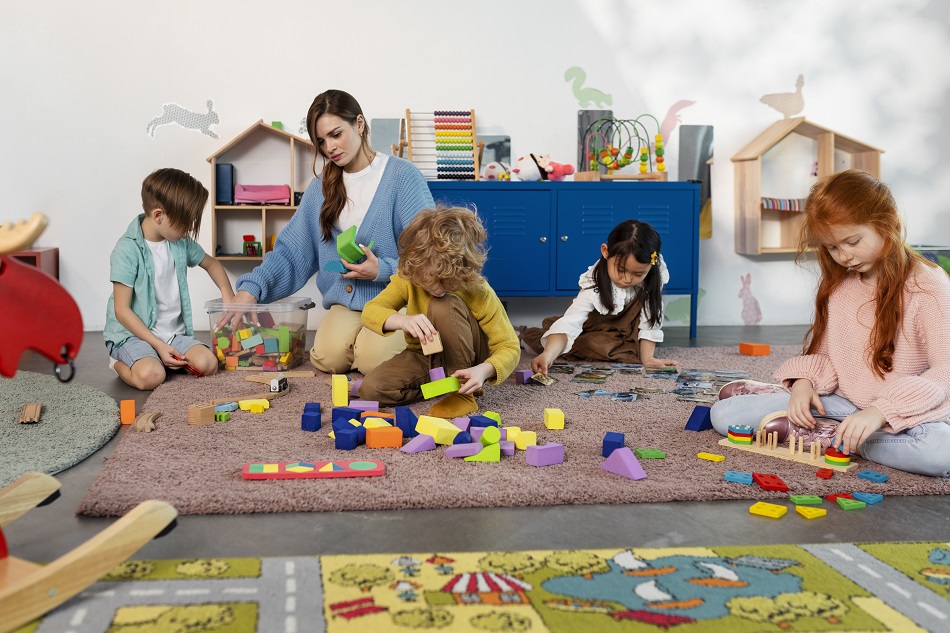
In this age of integration, multilingualism has gone from being a significant plus to an absolute necessity. The early years in a child's development are often the best time for families moving through multiple international education systems to acquire languages. Choosing an appropriate nursery school is one of the best methods parents can do to support multilingualism in early childhood a process that will not only give lifetime effects for cognitive and social benefits.
Neuroplastic Benefit of Early Childhood
A young child has a neural architecture that is specifically calibrated to absorb language. The brain is neuroplastic for the first five years of life, with synaptic connections forming quickly. A child at a multilingual nursery school does not attend to learn a second or third language intentionally or through drills. Instead, they learn languages implicitly through natural exposure, like their first language.
Immersive Environments and Organic Acquisition
This natural propensity is utilized by an international nursery school in which it builds a multi-layered language environment. Instead of separating language advancement into specific subject blocks, junior programs in bilingual or multilingual surroundings use multiple languages throughout their day-to-day work force. All the singing, story time and sensory exploration that kids undergo embodies different vocabulary and phonetic structures from a very early age. This immersive, extremely contextual exercise continues to train the young brain without conscious thought to navigate multiple language systems.
Using Social Interaction to Attain Fluency
Remember, the use of language is inherently social and a nursery school environment gives children the opportunity to sound off with their peers and to be productive in terms of output. Children are instinctively determined to communicate with the classmates and teachers around them when they are in a diverse classroom. They are playing with the languages around them by figuring out how to ask for things, sharing toys or playing in groups. This interactive climate minimizes the inhibitions of adult-language-learning awkwardness and enables phonetic craftsmanship and communicative confidence to blossom naturally in children.
Cognitive Benefits Beyond Communication
Learning a second language in nursery school is more than just knowing how to speak several languages. Studies repeatedly show that children who use more than one language have stronger executive functioning skills. Multilingualism demands a mental task of switching, activating one language system while receding the other. This mental workout boosts mental flexibility and problem-solving skills as well asworking memory, which is an academic advantage that helps students later on in their educational lives.
The Early Development of Gobal Perspective
At the end of the day, language and culture are intertwined. Teaching children a second or other language is also exposing them to different angles and traditions by giving the child an environment where they grow up hearing more than one language in a nursery school. Learn as early age that there is not only just one way to share an idea and enter the world, this logic leads to deep empathy cultural sensitivity and open mindedness. This the early cross-cultural competence is the foundation of global citizenship, so that young learners will grow up to adapt and be empathic in a diverse world.